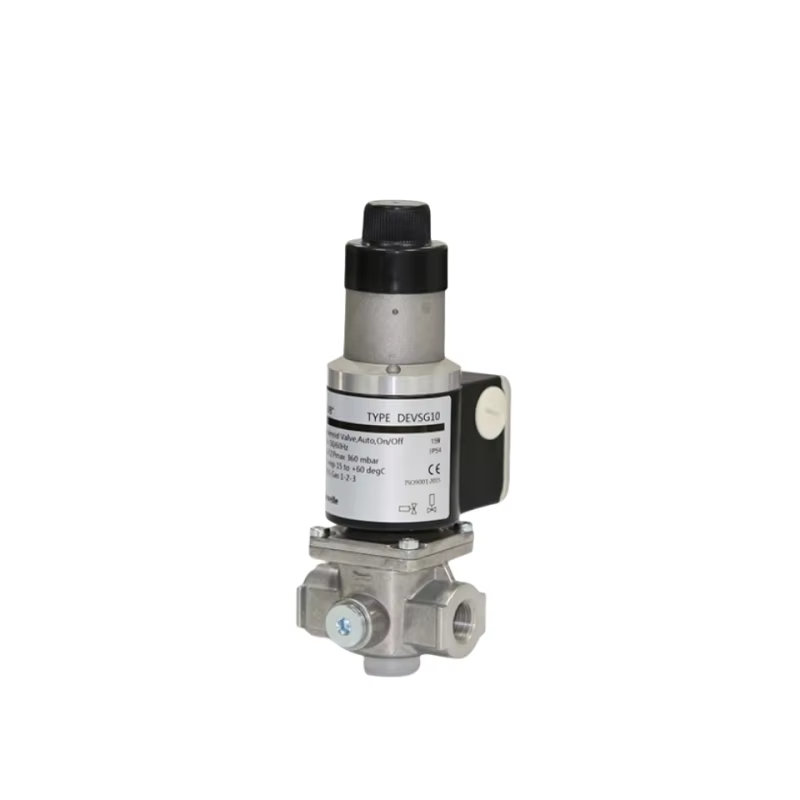
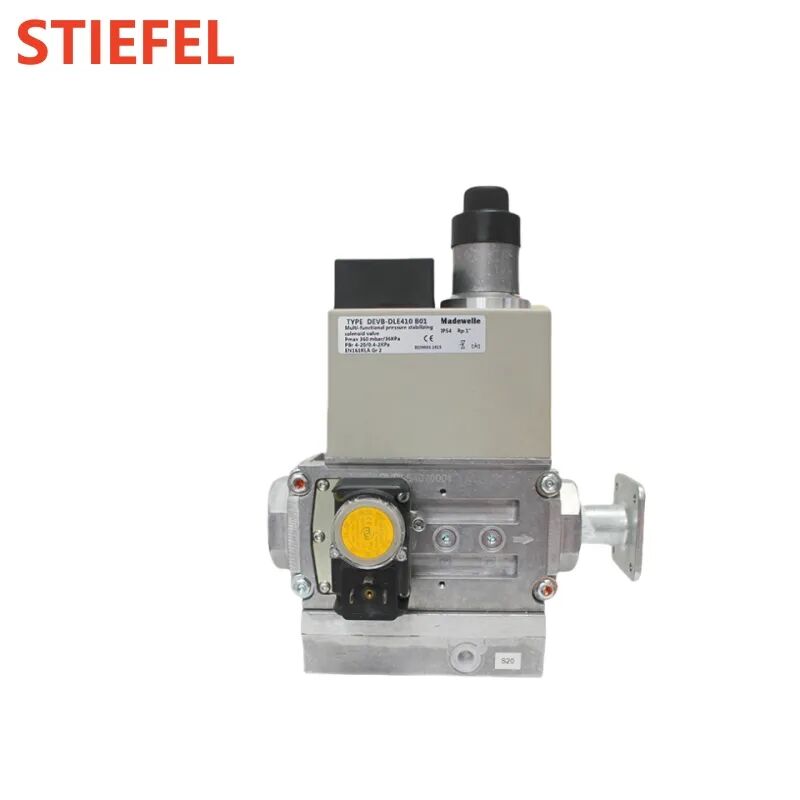
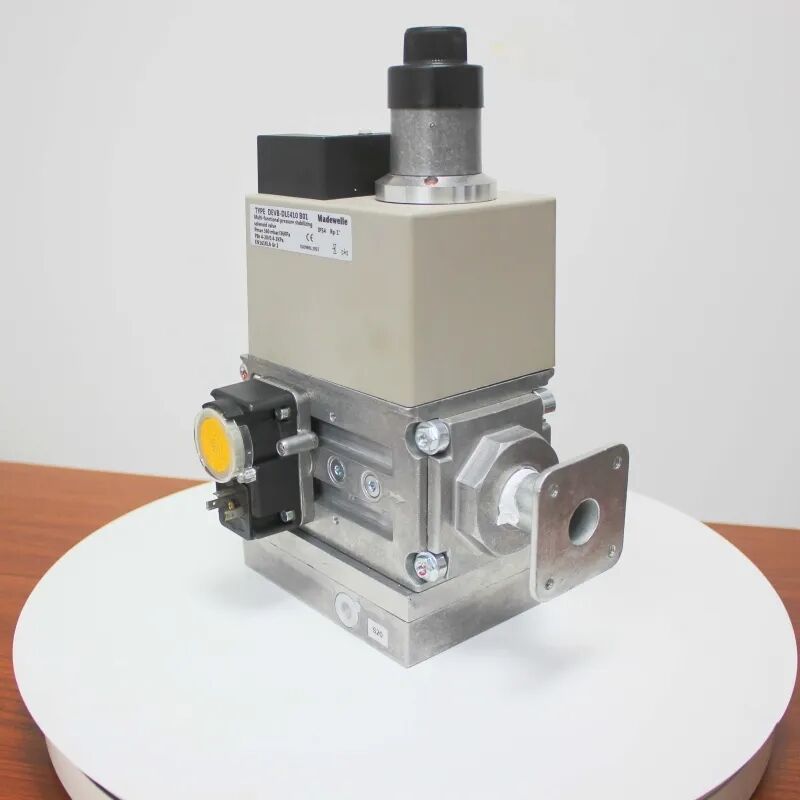
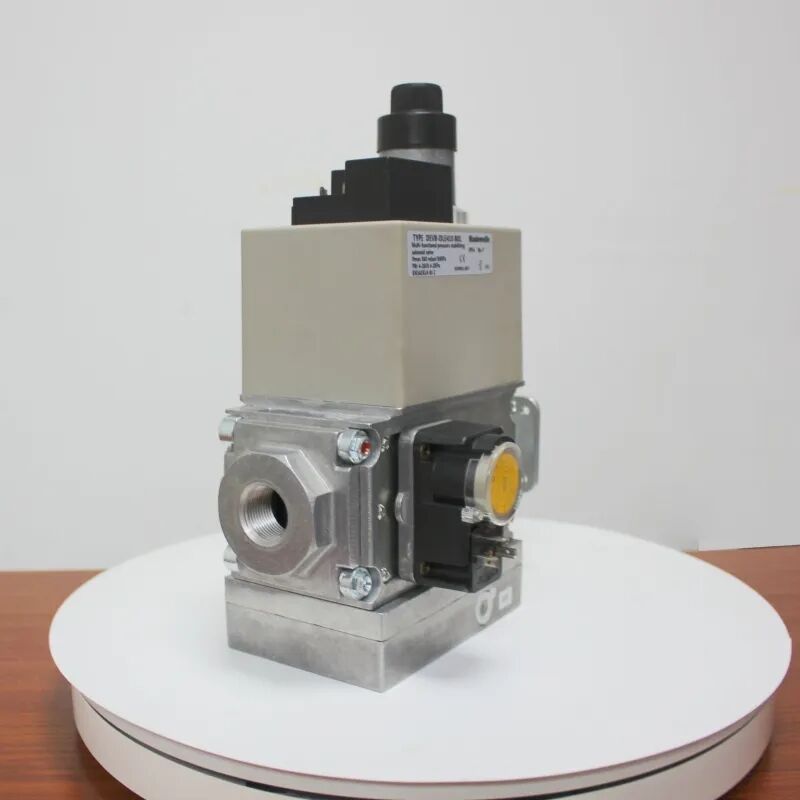
AC Solenoid Valves serve as the fundamental electromechanical gatekeepers for gas flow in a vast array of industrial and commercial systems. At Stiefel Combustion, our specialization in combustion technology directly informs the design and specification of our AC Solenoid Valves, positioning them as more than mere commodity parts. These devices are engineered to perform a critical safety function: the rapid and positive shut-off of fuel gas upon receiving an electrical signal. This operation is paramount in combustion systems, where controlled gas delivery is essential for safe ignition, stable operation, and immediate shutdown in response to control system commands or fault conditions.
The core principle of an AC Solenoid Valve involves an electrical coil that, when energized with alternating current, generates a magnetic field. This field pulls a plunger or armature against a spring, lifting the valve seal from its seat and allowing gas to pass through the orifice. De-energizing the coil collapses the magnetic field, allowing the spring to return the plunger and seal the orifice, stopping flow instantly. The choice of AC power is common in industrial facilities due to the widespread availability of mains power, and our valves are optimized for this, featuring coils designed to handle AC's characteristics to prevent humming and ensure quiet, reliable actuation.
In practical application, the role of an AC Solenoid Valve is most evident within a gas train assembly for an industrial burner. Typically, two valves in series form a safety shut-off system. Upon a call for heat from the system controller, the ignition sequence begins, and the AC Solenoid Valves are energized to open, allowing gas to flow to the burner head for ignition. During operation, they remain open, modulating as needed in some designs. Crucially, at the end of the cycle or upon detection of any fault—such as flame failure, high temperature, or loss of air pressure—the controller immediately de-energizes these valves. Their fast closure, often within milliseconds, cuts off the gas supply to prevent dangerous accumulation, making them a first-line safety device.
Selection criteria for the appropriate AC Solenoid Valve are multifaceted. The medium (natural gas, propane, butane, etc.) determines material compatibility for seals and body. Pressure ratings must exceed the maximum system operating pressure. Orifice size (often denoted as Kv value) must be matched to the required gas flow rate to ensure proper burner output without causing excessive pressure drop. The voltage and frequency (e.g., 220VAC/50Hz, 110VAC/60Hz) must match the local power supply. Environmental factors demand consideration of ingress protection (IP) ratings for dust and moisture, as well as ambient temperature ranges. Furthermore, certifications for use in specific geographical markets or hazardous areas may be required.
A common scenario involves a packaging plant upgrading its thermal oxidizer unit. The existing AC Solenoid Valves may be failing intermittently, causing nuisance shutdowns and production delays. The plant engineer needs a reliable, direct replacement that matches the pipe size, pressure rating, and electrical characteristics but seeks improved durability. By consulting with Stiefel, they can source a valve constructed with higher-grade stainless steel internals and a Class F or H insulated coil capable of withstanding higher temperatures, directly addressing the failure mode and increasing mean time between failures (MTBF). This application-specific upgrade, guided by combustion expertise, enhances overall system reliability.
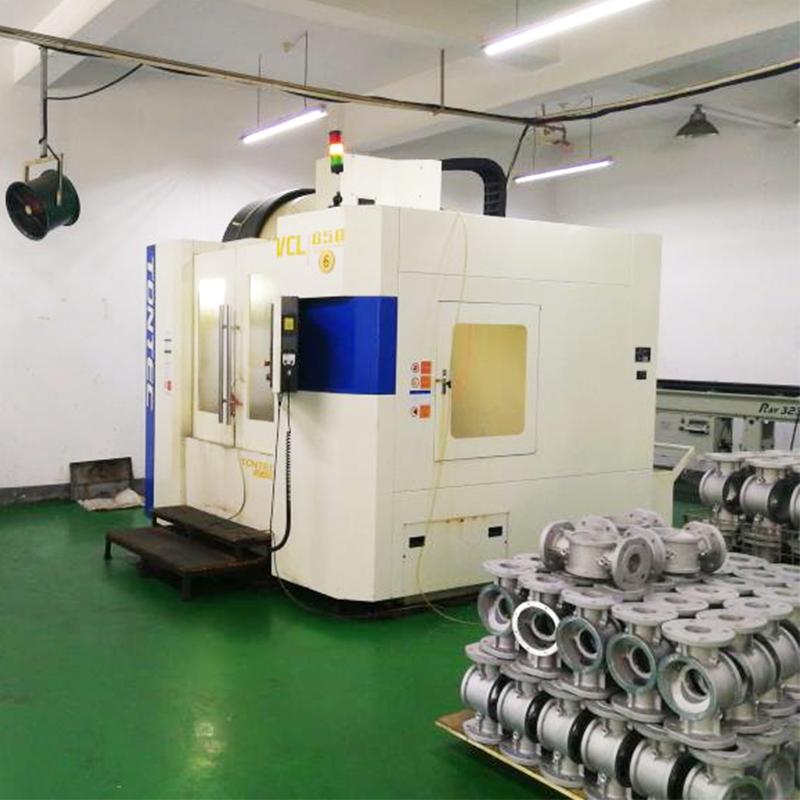
For specialized applications, such as precise gas mixing for ceramic kilns or high-temperature furnaces, the requirements extend beyond basic on/off functionality. Here, the valve's response time consistency and leak-tightness in the closed position are critical for process control and safety. Our development focus ensures our valves provide the necessary repeatability and sealing integrity. We understand that even minor leakage in a closed valve can lead to unsafe conditions or process impurities. Therefore, our manufacturing processes emphasize precision machining of seats and seals to achieve industry-leading sealing standards.
We invite you to contact our technical sales team to discuss your specific AC Solenoid Valve requirements. Please provide details such as the gas type, operating pressure, pipe connection size, voltage/frequency, and the application (e.g., boiler burner, oven, incinerator). Based on this information, we can recommend the optimal model from our range or discuss custom solutions. For accurate and competitive pricing tailored to your order specifications and volume, kindly reach out to us directly.
 EN
EN