EN
EN

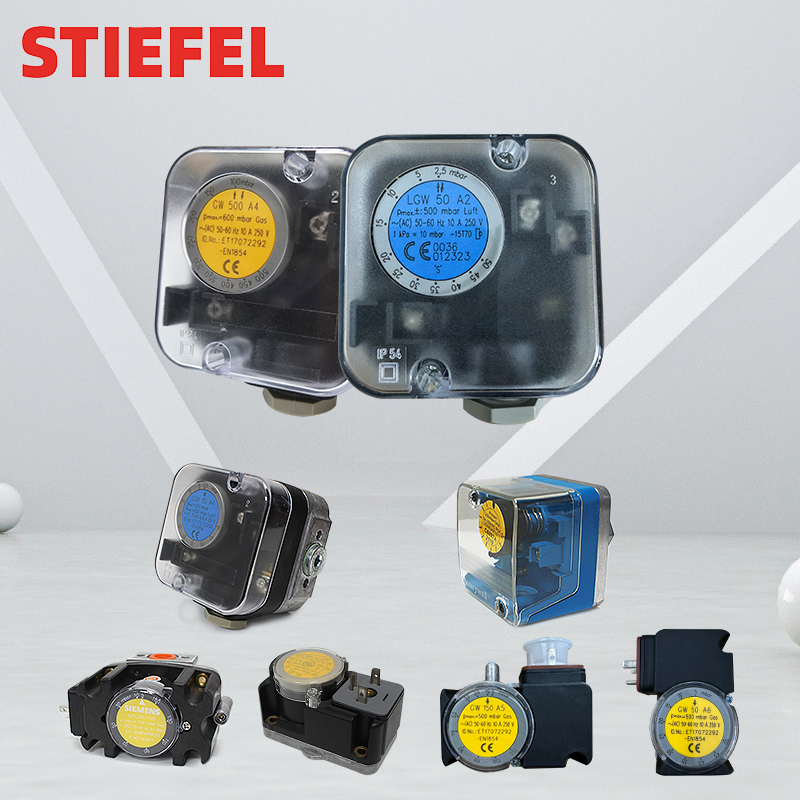
Core Safety Function: How Pressure Switches Enable Flame Safeguard Logic
Enforcing pre-purge, ignition verification, and post-ignition pressure validation
Pressure switches play a vital role in keeping industrial burners safe during operation. When the system goes through its pre-purge stage, these switches check if there's enough air moving through the ducts at around 0.2 to 0.8 inches water column pressure. This helps ensure proper ventilation before any fuel gets released into the chamber, which stops dangerous gas buildups from happening. Once ignition starts, the switches pick up on those quick pressure jumps caused by the pilot flame lighting up, usually within just a few thousandths of a second. This tells the control system it's okay to move forward with the next steps in the process. After the main flame has been established, continuous monitoring happens too. The switches keep an eye on pressure levels throughout the entire combustion cycle to make sure everything stays stable. If any of these safety checks fail, serious problems can occur like explosions or dangerous fuel leaks. Most modern equipment now uses programmable logic controllers (PLCs) to handle all these safety functions. These controllers won't let the burner progress through different stages unless they get confirmation from each pressure switch in sequence.
Failure impact: Why 92% of ASME CSD-1 burner lockouts stem from pressure switch validation errors
Malfunctioning pressure switches can really mess up safety systems. According to industry reports, around 92% of those burner lockouts following ASME CSD-1 standards actually come down to problems with pressure checks most of the time. The usual suspects? Calibration drifting out of spec or sensors getting dirty over time. When false readings happen during the pre-purge phase, we end up with unnecessary equipment shutdowns. Worse still, if failures go unnoticed during ignition startup, there's a real risk of releasing fuel without proper verification which creates serious explosion dangers. Looking at what typically goes wrong, diaphragms tend to wear out after repeated cycles causing delayed responses. Contaminants building up inside the system also mess with how the switch reacts when pressure changes. And let's not forget about electrical issues in those proof-of-closure circuits either. Regular maintenance checks combined with monitoring pressure differences throughout operation makes a huge difference in preventing these kinds of incidents.
Fuel-Agnostic Application: Pressure Switch Requirements Across Gas, Oil, and Dual-Fuel Burners
Differential Pressure Thresholds for Low-NOx and Staged-Combustion Systems (<0.5 in. w.c.)
Pressure switches play a critical role in safety for various fuels, and they're set up differently depending on what kind of fuel is being used. For those low NOx burners out there, getting the air right means working with pressure differences under about half an inch water column to keep those flames steady and emissions low. Things get even trickier with staged combustion systems since they split the airflow into multiple zones. The pressure monitoring here needs to catch really small changes otherwise we risk problems like flame lift off or worse, flashback situations. That level of detail matters a lot when trying to maintain both efficiency and safety standards across different applications.
Gas-fired units rely on switches calibrated for rapid gas-valve cutoff during deviations; oil burners demand resilience against fuel-line pulsations; dual-fuel systems require pressure switches that accommodate divergent viscosity profiles during fuel switching—without recalibration. Key operational standards include:
- Staged-combustion verification: Ensuring each zone maintains pressure differentials within ±0.1 in. w.c.
- Safety logic integration: Linking pressure validation to burner management systems (BMS) for shutdown within 0.3 seconds of unsafe conditions
The ultralow differential thresholds (<0.5 in. w.c.) in modern low-emission burners represent a 70% reduction versus conventional systems—necessitating near-zero hysteresis, specialized diaphragms, and strict adherence to ASME CSD-1 guidelines. Exceeding these tolerances reduces combustion efficiency by 15–22% in staged systems.
Integration with Boiler Pressure Controls for Operational Reliability
Industrial pressure switches are indispensable for harmonizing boiler safety and efficiency. Their integration with pressure controls directly impacts system stability, turndown performance, and equipment longevity.
Functional separation: Operating vs. high-limit (manual-reset) pressure controls per ASME Section I
According to ASME Section I requirements, there needs to be distinct physical and functional separation between regular operating controls and those for high limits that require manual reset. This setup helps avoid dangerous situations where pressure gets out of control. The standard operating control handles normal pressure changes automatically by cycling on and off as needed. Meanwhile, the manual reset high limit acts as a backup safety measure that only activates when there's actually been a confirmed pressure surge beyond safe levels. Special pressure switches check both these systems work together properly, making sure the burners shut down only when pressure really does go past what's considered safe. By keeping these systems separate, short term pressure spikes won't cause the whole system to shut down unexpectedly, which means operations can continue running smoothly without unnecessary interruptions.
Modulating control synergy: How pressure switches optimize turndown ratio and reduce short-cycling risk
Pressure switches in modulating boilers work by adjusting how much the burners fire based on what the system actually needs at any given moment. These devices sense small changes in pressure differences and can handle turndown ratios above 10:1 while keeping the flames stable. Short cycling becomes a thing of the past when these switches are properly installed. Why does this matter? Because repeated on-off cycles create thermal stress, damage refractories, and waste fuel. When there's less demand for heat, the pressure switch simply waits until the pressure drops below where it should be before restarting the burner again. This approach cuts down on how often the system cycles through start-stop operations by around 40% in facilities with fluctuating loads. The result? Longer lasting components across the board and better overall efficiency when it comes to burning fuel.
Technical Integrity: Design, Certification, and Performance Criteria for Industrial Pressure Switches
Normally open vs. normally closed configurations per UL 863 and NFPA 85
Pressure switches typically come in two varieties: normally open (NO) contacts or normally closed (NC) contacts, each serving different safety functions in industrial settings. With NO contacts, the circuit stays open until it hits some activation point, at which point it closes to let current flow through. These work great for things like verifying there's enough airflow before starting up equipment. On the flip side, NC contacts start out closed but will pop open when pressure gets too high, cutting off ignition circuits exactly how NFPA 85 wants for keeping combustion processes safe. When it comes to meeting UL 863 standards, manufacturers need to ensure proper spacing between contacts, maintain certain distances between conductive parts, and pass tests that check how well they resist electrical breakdowns to avoid dangerous arc flashes. Most folks working with low-NOx systems where pressures stay under about half an inch water column tend to go with NC setups because they handle those tricky borderline pressure situations much better than their NO counterparts.
SIL-2 compliance: Response time, hysteresis, and proof-of-closure requirements
SIL-2 certification requires pressure switches to meet three rigorously validated benchmarks:
- Response time < 200 ms to interrupt unsafe ignition sequences
- Hysteresis ≥ 15% of setpoint to prevent contact chattering near trip points—especially critical in VFD-fan modulation
- Proof-of-closure verification, using auxiliary switches or position indicators, to confirm physical contact movement
These features collectively ensure <1% probability of dangerous failure and >90% diagnostic coverage. Burner management systems embed these verified signals into redundant logic chains, enhancing combustion safety integrity and reducing lockouts from validation errors—aligning with the 92% figure cited in ASME CSD-1 incident analysis.
Proactive Troubleshooting: Diagnosing and Preventing Common Pressure Switch Failures
Differentiating true overpressure events from calibration drift or plenum sensor misalignment
Accurate diagnosis begins with distinguishing genuine overpressure from instrumentation error. Common false triggers include:
- Calibration drift from aging diaphragms or ambient temperature shifts
- Plenum sensor misalignment skewing airflow interpretation
- Debris clogging sensing lines or impulse tubes
Verify readings using traceable, calibrated test gauges at designated ports—and cross-reference values against controller logs during startup, steady-state, and shutdown. Document baseline pressures annually to identify subtle deviations early. In low-NOx applications, even a 0.1 in. w.c. offset can trigger nuisance lockouts.
VFD-fan correlation analysis: Identifying root causes of pressure spike-induced trips
Variable frequency drive (VFD)-induced pressure transients account for 38% of unexplained trips. Effective root-cause analysis requires correlating trip events with:
- VFD acceleration/deceleration rates relative to fan inertia
- Damper position feedback during modulation transitions
- Pressure switch response timing versus PLC control signals
Use timestamp-synchronized SCADA data and install transient recorders to capture microsecond-scale spikes invisible to standard PLC sampling. Optimizing VFD ramp times mitigates hydraulic hammer while preserving combustion stability—reducing short-cycling by 72% in modulating systems.
FAQs
What is a pressure switch in an industrial burner?
A pressure switch in an industrial burner monitors airflow and pressure changes to ensure safe operation. It helps in detecting pre-purge air movement, ignition pressure changes, and maintaining pressure stability throughout the combustion process.
Why are pressure switch errors common causes of burner lockouts?
Pressure switch errors often cause burner lockouts because they can stem from miscalibrations, dirty sensors, or worn-out diaphragms leading to false readings and hence, unnecessary shutdowns.
What types of pressure switch configurations exist?
Pressure switches come in normally open (NO) and normally closed (NC) configurations. NO switches close upon specific pressure settings, while NC switches open when pressure exceeds safety limits, thus helping in combustion safety.
How does SIL-2 compliance enhance safety in pressure switches?
SIL-2 compliance ensures pressure switches have quick response times, controlled hysteresis, and proof-of-closure features, all of which together provide high diagnostic coverage and reduce the chances of dangerous failures.
Table of Contents
- Core Safety Function: How Pressure Switches Enable Flame Safeguard Logic
- Fuel-Agnostic Application: Pressure Switch Requirements Across Gas, Oil, and Dual-Fuel Burners
- Integration with Boiler Pressure Controls for Operational Reliability
- Technical Integrity: Design, Certification, and Performance Criteria for Industrial Pressure Switches
- Proactive Troubleshooting: Diagnosing and Preventing Common Pressure Switch Failures
- FAQs