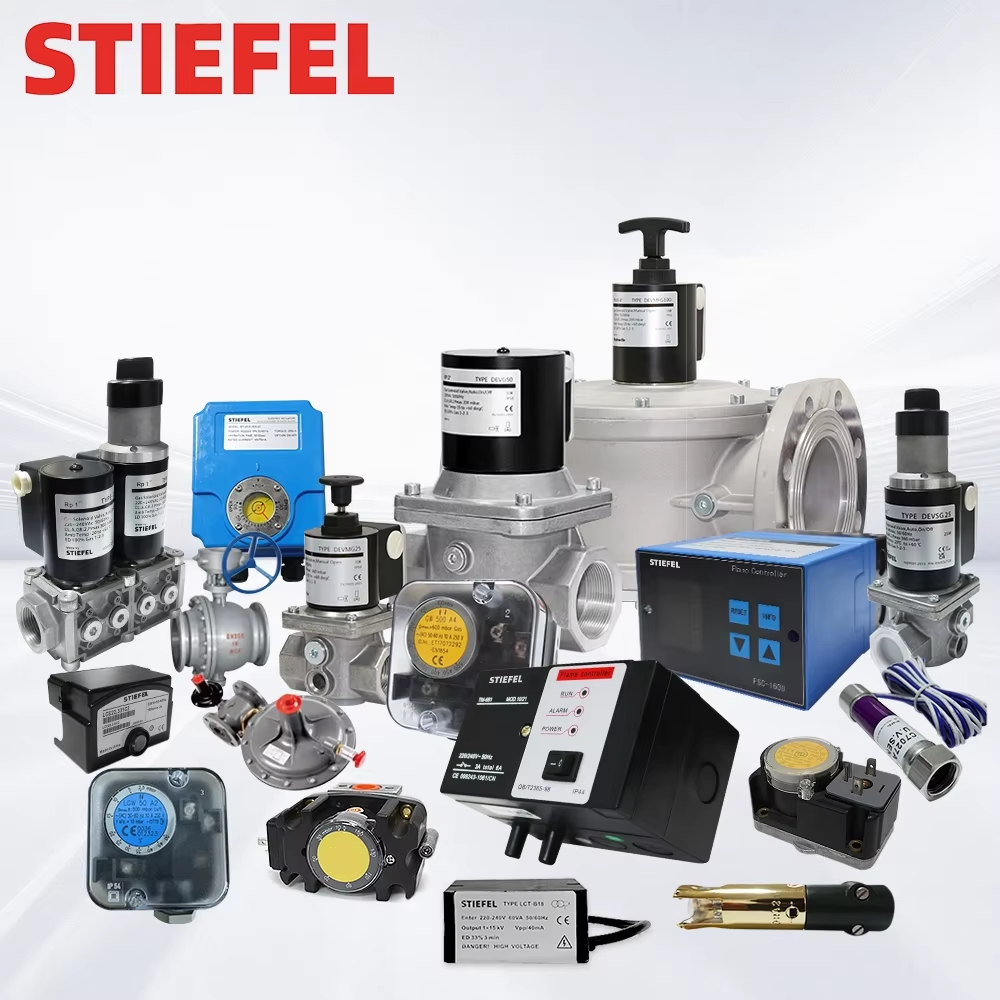
Within the engineered architecture of an industrial gas burner, the gas train is its circulatory system, and the gas burner gas valves are the vital organs controlling flow, pressure, and, most importantly, safety. These are not simple plumbing fixtures; they are sophisticated electro-mechanical devices whose selection, configuration, and reliability directly determine a system's operational safety, fuel economy, and compliance with stringent regulations. A failure in any valve within this hierarchy can lead to consequences ranging from inefficient combustion and increased emissions to dangerous gas accumulation and potential ignition hazards. Therefore, understanding the specific roles and technical requirements of each valve type—from the rapid-response solenoid to the modulating butterfly valve—is fundamental for engineers, facility managers, and maintenance professionals responsible for combustion assets.
At the forefront of operational control and safety are the solenoid valves and safety shut-off valves. The solenoid valve is typically the workhorse for automatic control, electrically activated to open or close the gas path upon a signal from the combustion controller. Its performance is critical for safe start-up and shutdown sequences. A slow-response or leaking solenoid can allow unburned gas to enter a combustion chamber after a failed ignition attempt, creating a hazardous condition. In contrast, the safety shut-off valve is a dedicated, often redundantly designed component that serves as the ultimate fail-safe. In many safety-proven systems, two valves in series create a "leak-test" zone between them, where the controller can check for valve seal integrity before every burner start. This dual-valve concept is a cornerstone of standards like EN 746-2 for industrial thermoprocessing equipment. For example, in a large ceramic kiln where precise temperature curves are essential, the failure of a single gas valve could lead to uncontrolled heating or an unsafe shutdown. Implementing a system with properly rated and certified safety shut-off valves mitigates this risk, ensuring fuel is isolated when required.
Moving from safety to efficiency, the role of gas regulators and butterfly valves becomes paramount. Combustion efficiency is highly sensitive to the correct air-to-fuel ratio. A gas regulator maintains a constant, predefined gas pressure to the burner nozzle despite fluctuations in the inlet supply pressure. This stability is crucial; variable pressure leads to a changing gas flow rate, which disrupts the stoichiometric balance if the air flow is not adjusted simultaneously. The result is inefficient combustion, often visible as a yellow, sooting flame or detected as high levels of carbon monoxide (CO) in the flue gas. In a commercial laundry facility using a boiler for steam generation, an unstable gas pressure due to a faulty regulator can increase fuel consumption by 5-10% while raising emissions. Pairing a precise regulator with an accurately controlled butterfly valve on the air intake allows for perfect modulation. The butterfly valve, often actuated by a precise servo motor or linkage system, adjusts the combustion air volume in direct correlation to the gas flow, maintaining an optimal ratio across the burner's turndown range—from high fire to low fire. This precise modulation capability is what enables modern condensing boilers to achieve thermal efficiencies over 99%.
The selection of appropriate gas burner gas valves extends beyond basic function to material compatibility, environmental factors, and electrical specifications. Valve bodies must be constructed from materials compatible with the specific gas type (natural gas, propane, or special process gases) and resistant to corrosion. Solenoid coils must be rated for the ambient temperature near the burner, often requiring high-temperature insulation to prevent burnout. Furthermore, in complex multi-burner systems or applications like Regenerative Thermal Oxidizers (RTOs), the sequencing and response time of valves are integrated into a larger programmable logic controller (PLC) strategy. A valve with an incorrect response time can desynchronize the purge and ignition sequence, causing nuisance lockouts. Thus, partnering with a supplier who provides not just components but also the technical data and support for system integration is critical. It ensures that each gas burner gas valve functions not as an isolated part, but as a synchronized component within a safe, efficient, and reliable combustion process, ultimately safeguarding operational continuity and profitability.
 EN
EN