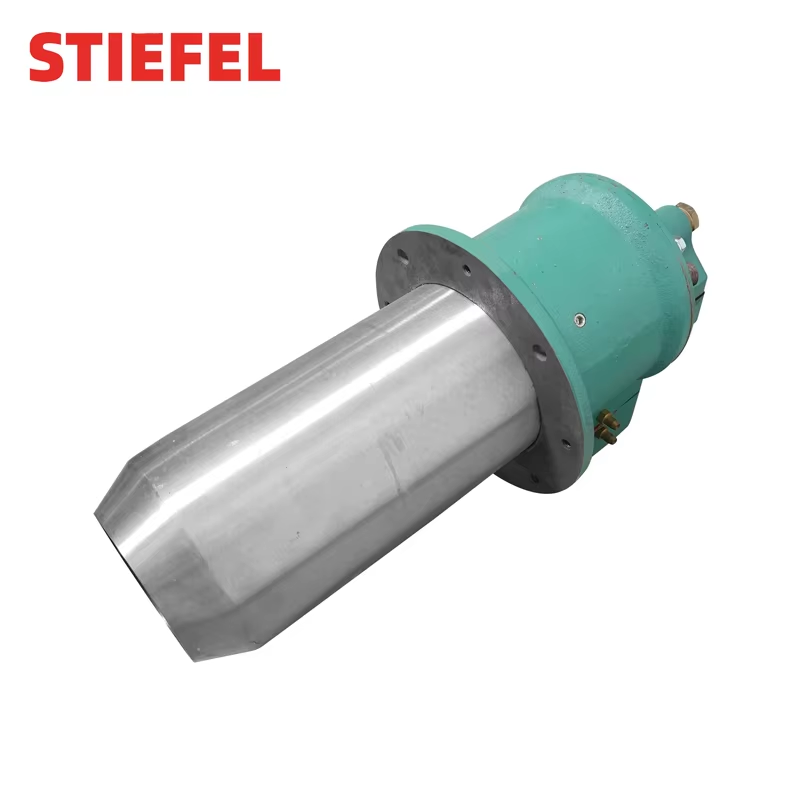
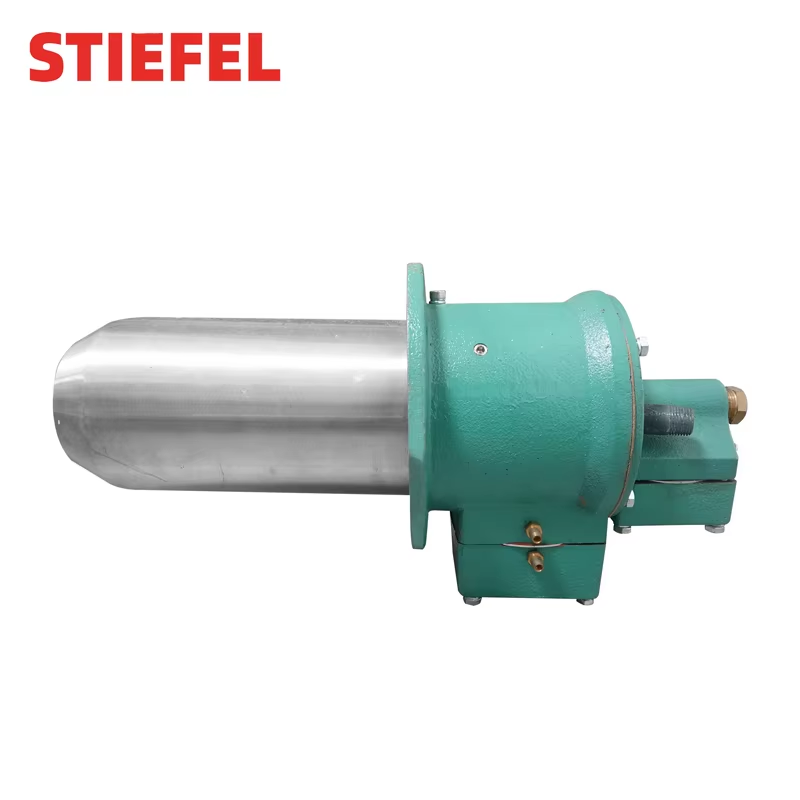
In the realm of industrial heating, the pursuit of efficiency is paramount, directly linking to operational profitability and environmental stewardship. Central to this pursuit is the Industrial Burner Heat Exchanger, a component that transforms waste into value within combustion systems. At Stiefel Combustion, we specialize in the provision of these critical devices, understanding that an effective Industrial Burner Heat Exchanger is not merely an accessory but a fundamental driver of system performance. The primary function of an Industrial Burner Heat Exchanger is to facilitate the transfer of thermal energy from the hot exhaust gases produced by an Industrial Burner to a cooler fluid stream, such as feedwater for a boiler, process air for a dryer, or a thermal oil loop. This recuperation of energy that would otherwise be expelled to the atmosphere is the essence of heat recovery, a process that systematically lowers the fuel input required for the Industrial Burner to maintain a desired output temperature.
The operational principle hinges on creating a conductive path through a large surface area, typically via tubes or plates, separating the hot exhaust from the cooler fluid. The design and material selection for an Industrial Burner Heat Exchanger are therefore critical engineering decisions. Factors such as the exhaust gas temperature, composition (which may include corrosive elements), flow rate, and the desired outlet temperature of the heated medium dictate the optimal configuration. For instance, in a packaged boiler system, a finned tube Industrial Burner Heat Exchanger installed in the flue path can pre-heat the boiler feedwater, significantly reducing the energy needed to turn it into steam. In an industrial furnace application, a radiant or convective Industrial Burner Heat Exchanger may be used to pre-heat combustion air, improving the burner's efficiency and flame stability. Each scenario demands a tailored approach to the Industrial Burner Heat Exchanger design to ensure maximum heat capture without causing excessive backpressure on the Industrial Burner or risking damage from condensation or fouling.
The benefits of integrating a high-quality Industrial Burner Heat Exchanger are substantial and multifaceted. The most immediate impact is a measurable reduction in fuel consumption, which can range from significant percentages depending on the base system efficiency and operating schedule. This translates directly into lower operating costs and a quicker return on investment. Furthermore, by extracting more usable energy from the same volume of fuel, the system's overall thermal efficiency rises, contributing to corporate sustainability targets and regulatory compliance. A well-designed Industrial Burner Heat Exchanger also contributes to system stability; for example, pre-heated combustion air can lead to more complete combustion and lower emissions. The durability of the Industrial Burner Heat Exchanger is equally important, as failure in this component can lead to costly downtime. Selecting an Industrial Burner Heat Exchanger constructed from materials resistant to high-temperature oxidation and acidic condensation is crucial for long-term, reliable service in tandem with your Industrial Burner.
For specific applications like thermal oil heaters, industrial ovens, or specific process heating lines, the requirements for an Industrial Burner Heat Exchanger can be highly specialized. The correct sizing, material grade (such as 304 or 316 stainless steel), and mechanical design are essential for success. We invite you to contact our technical team at Stiefel Combustion to discuss your specific application needs. We can provide detailed information on the most suitable Industrial Burner Heat Exchanger solutions for your system and offer a personalized quote based on your technical parameters. Investing in the right Industrial Burner Heat Exchanger is a strategic decision for enhancing the performance and economy of your Industrial Burner system.
 EN
EN