EN
EN

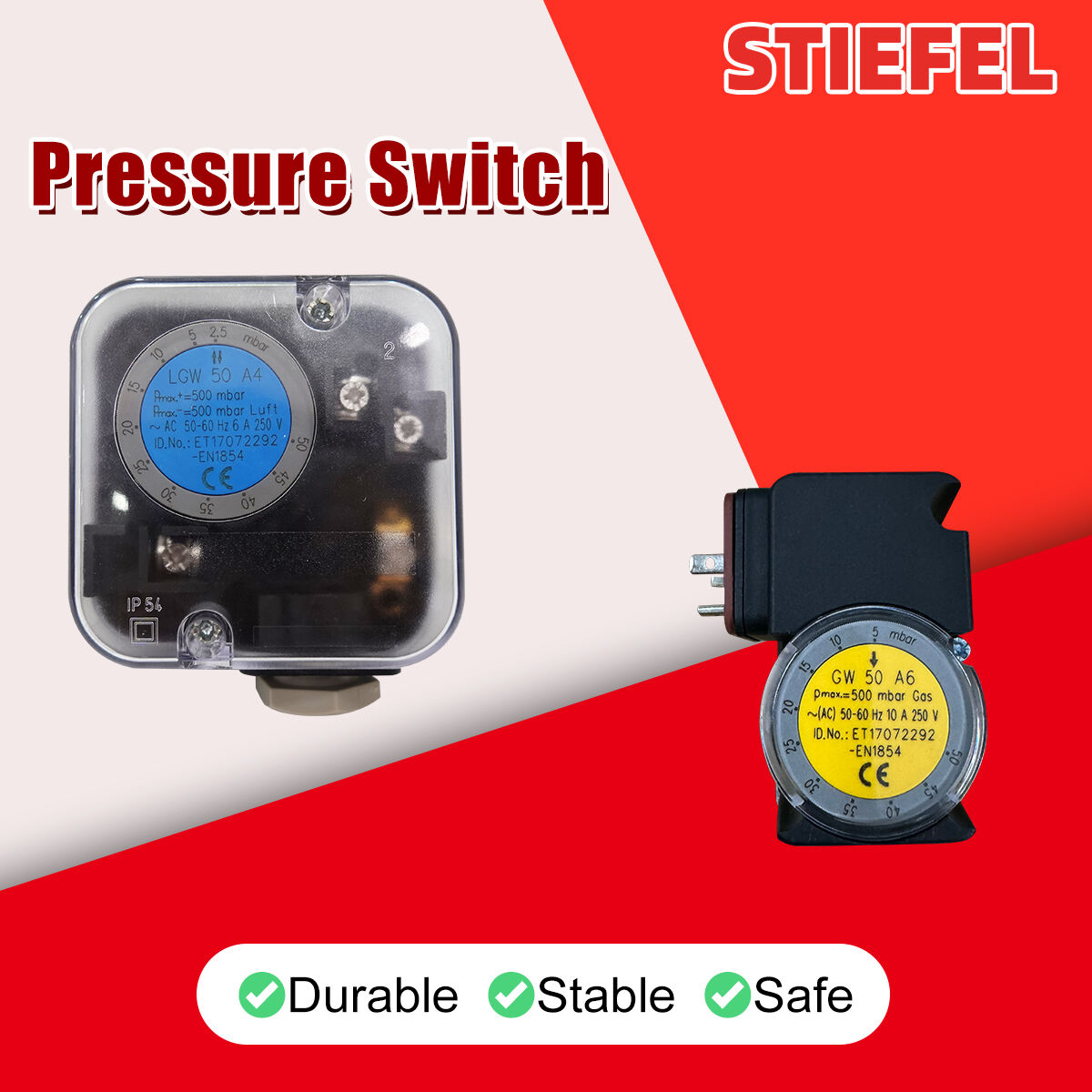
Core Pressure Switch Selection Criteria for Boiler Safety
Operating Pressure Range and Safety Margins: Why 1.5 Times Working Pressure Falls Short in Steam Boilers
Steam boilers need pressure switches that can handle at least 2.5 times the maximum working pressure instead of the usual 1.5 times safety margin because of those sudden temperature shocks right at startup time. These quick bursts of pressure often hit around 2.8 times what's normal, which means smaller switches just cant take it and end up failing way too soon. According to field reports from maintenance teams across various plants, about one third of all boiler shutdowns happen because technicians overlooked these temporary pressure spikes when setting up or calibrating the switches. For anyone looking to keep their systems running smoothly without constant breakdowns:
- Specify switches with a minimum 2.5 times operating pressure rating
- Choose models with built-in hysteresis compensation to dampen steam hammer effects
- Validate calibration against ASME BPVC Section IV tolerances—this ensures alignment with boiler safety valve response curves and prevents both false trips and delayed shutdowns.
Proof Pressure vs. Burst Pressure: Ensuring Overpressure Event Containment
The proof pressure of a switch refers to the maximum continuous pressure it can handle without getting permanently damaged, and this should be at least 25% higher than what might happen in the worst overpressure situations. When we talk about burst pressure, we're referring to when the device actually fails completely, and there needs to be around four times the normal working pressure before this happens. Switches that meet EN 14597 standards can keep their seals intact even under proof pressures reaching 10,000 PSI, which makes them reliable choices especially when safety valves aren't doing their job properly. On the flip side, switches that don't comply with these standards might break down at only 150% of regular operating pressure, which is way below what's considered safe. Look for switches where the proof pressure compared to burst pressure is at least four to one. This particular ratio gives a better picture of how well the switch will contain pressure than looking at either number separately does.
Media and Temperature Compatibility for Long-Term Pressure Switch Reliability
Steam-Compatible Materials: Stainless Steel 316 vs. Brass Above 150°C
The choice of materials really matters when it comes to ensuring reliable performance and safety in steam systems over time. Stainless steel grade 316 holds up well under heat and resists corrosion even at temperatures reaching around 250 degrees Celsius. This is because it contains chromium, nickel and molybdenum that work together to create a protective oxide layer on the surface. This layer helps prevent both oxidation damage and those nasty stress cracks that can develop over time. Brass tells a different story though. Once temperatures go past about 150 degrees Celsius, brass starts breaking down quickly through a process called dezincification where zinc gets leached out selectively. This weakens the metal's structure and makes it much more prone to cracking when exposed to steam. Anyone trying to use brass components in hot steam environments should be aware they're asking for trouble eventually. The seals might fail, instruments could start giving inaccurate readings, and important safety interlocks might not work properly when sudden pressure changes occur.
| Property | Stainless Steel 316 | Brass |
|---|---|---|
| Max Steam Temp | 250°C | 150°C |
| Corrosion Resistance | Excellent (passive layer) | Poor (dezincification) |
| Mechanical Stability | Maintains strength | Rapidly weakens |
Thermal Stability and Setpoint Drift: Mitigating Diaphragm Expansion Effects
When sensing diaphragms expand due to heat, they tend to drift from their set points. This becomes really problematic at boiler start up times because as temperatures rise, the pressure needed to trigger action drops before steam pressure builds fully. What happens then? The system ends up running under pressure, which can cause safety interlocks to miss their activation window entirely. To fix this issue, engineers incorporate special design features like bi metal components or specially matched alloy materials that basically fight back against those expansion forces. These compensated systems keep things within about 1 percent accuracy throughout all possible temperature ranges. Getting this right matters beyond just numbers on a gauge. It ensures shutdowns happen predictably and consistently according to how the boiler control system was intended to work.
Set-Point Behavior, Accuracy, and Deadband Alignment with Boiler Control Logic
Factory-Fixed vs. Adjustable Set-Points: Prioritizing Interlock Integrity Over Field Flexibility
When it comes to those critical safety functions in boilers like high pressure cutoffs and low water interlocks, most experts recommend going with factory fixed set point switches instead of adjustable ones. These sealed and pre calibrated models stop people from messing around with them on site and they just don't drift as much over time. Field tests actually show that adjustable units tend to drift about three times more often when exposed to temperature changes. And even small amounts of drift matter a lot. We're talking about delays of 15 to 30 milliseconds in activation timing which might not sound like much but can be enough to let pressure build past the ASME BPVC Section IV limits when something goes wrong. The main advantage of fixed set points is their reliability. They perform the same way every time and work seamlessly with existing boiler controls and burner management systems across different installations.
Optimizing Deadband to Prevent Short-Cycling in Modulating Boiler Applications
The deadband, which is basically the difference between when a system turns on and off based on pressure levels, needs proper sizing for good modulation stability. If this gap gets too small, say under 5% of whatever pressure we're working with, then things start cycling back and forth constantly. The system just keeps turning itself on and off because the pressure bounces around so close to the target setting. This kind of behavior puts real strain on all sorts of components like solenoids, actuators, and control systems. Field data shows failure rates jump somewhere around 40% higher in these situations. Take a standard 100 PSI setup for instance. Most folks find that setting a deadband between 7 and 10 PSI works pretty well. That gives enough buffer room to handle everyday pressure variations without making the whole system sluggish, yet still lets it react quickly when there's actually an overpressure situation that needs attention.
Certifications, Correct Installation, and Top Pressure Switch Selection Pitfalls
Essential Certifications: ASME BPVC Section IV, UL 508, and EN 14597—What They Actually Cover
Safety certifications aren't optional extras or marketing gimmicks but essential requirements for proper operation. The ASME BPVC Section IV standard checks whether equipment can safely contain pressure and handle unexpected surges without failing catastrophically. Then there's UL 508 which looks at how well electrical components hold up when switches are flipped repeatedly and whether sparks will fly in dangerous settings. For boilers across Europe, EN 14597 becomes important too since it ensures materials work properly under heat stress and maintain structural integrity at operating pressures. When installing these systems, don't rely solely on labels stuck to panels somewhere. Real inspections need actual paper trails showing compliance, so always check those official certificates before signing off on any installation job.
Installation Errors That Cause False Trips: Orientation, Vibration, Grounding, and Thread Mismatches
Even certified, correctly specified switches fail prematurely when installed improperly. Common pitfalls include:
- Vertical misalignment causing diaphragm distortion or condensate trapping in the sensing chamber
- Thread sealant migration into sensing ports, blocking pressure transmission
- Grounding loops from shared conduit paths introducing electrical noise into low-voltage control signals
- Mounting on vibrating surfaces without isolation, inducing set-point drift
- Cross-threading or overtightening BSPP fittings, which compress bonded seals asymmetrically and create micro-leaks mistaken for pressure loss
Always perform static pressure testing—before energizing control circuits—to detect installation-induced leaks or mechanical interference. Commissioning with real-world pressure profiles, not just bench calibration, ensures the switch behaves predictably within the full boiler control ecosystem.