EN
EN

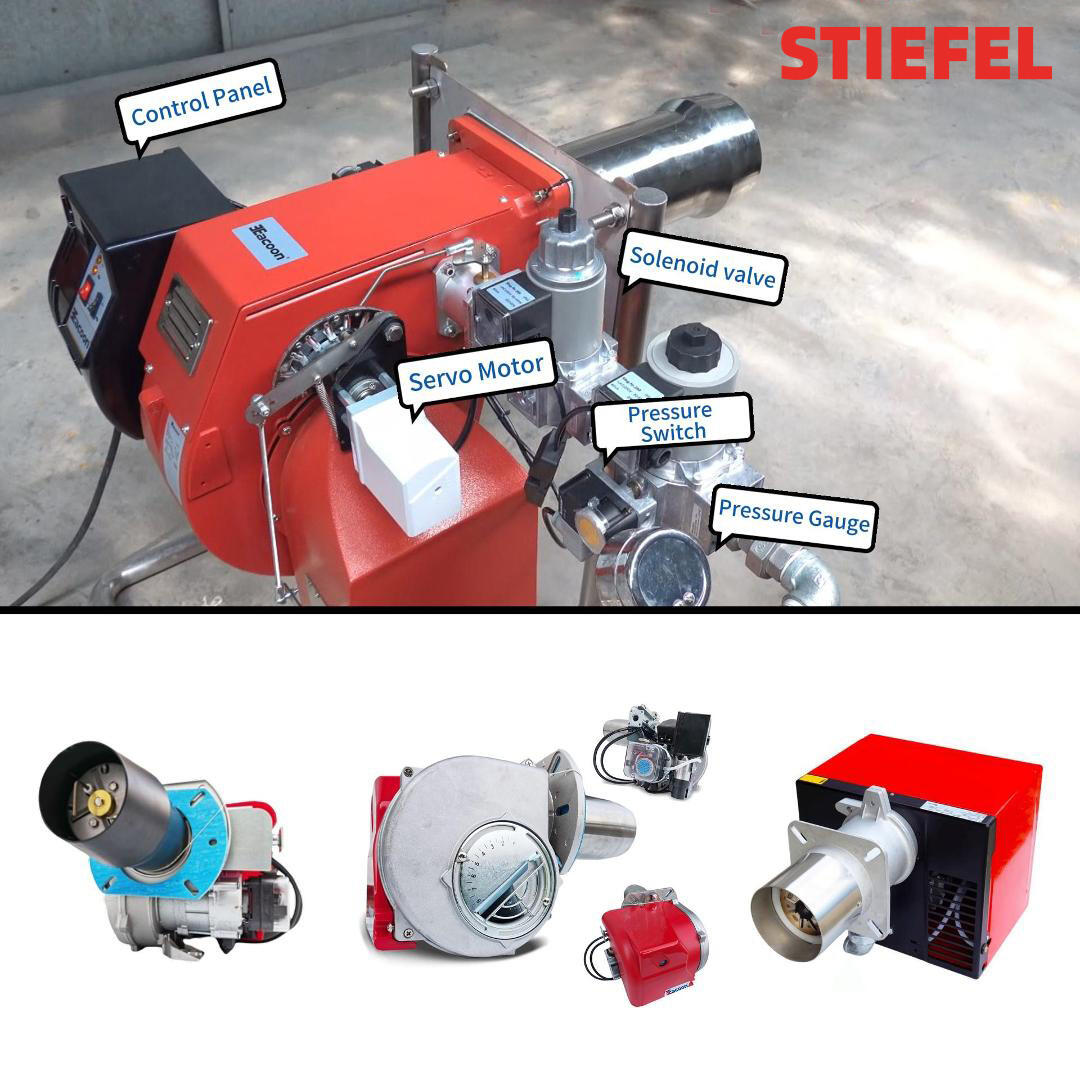
Core Burner Components and Their Role in Boiler Efficiency
The Function of Burner Parts in Industrial Boiler Systems
Boiler burners in industrial settings need both mechanical and electrical parts working together just right to get good combustion going. The fuel valves control how much gas or oil gets fed into the system, and those special nozzles turn liquid fuels into fine sprays that can actually catch fire. There's also those little electrodes that create the spark needed to start things burning, plus air dampers that adjust how much oxygen comes in the mix. These components really have to work well together because when they do, today's boilers can hit around 92 to 95 percent efficiency in burning fuel. That means most of the energy ends up as heat instead of being wasted. According to recent studies from Combustion Engineering in 2023, this level of performance makes a big difference in overall plant efficiency and fuel costs.
How Burner Maintenance Impacts Overall Boiler Efficiency
Regular maintenance work stops those little efficiency losses that pile up over time and end up costing plants around $18.50 for every hour a boiler goes without proper care, as noted by the Energy Institute back in 2023. When techs clean out all that carbon buildup on burner heads, they get better flame patterns going. And swapping out old gaskets helps too since those air leaks mess with the right mix of fuel and air. Plants that check components every other month tend to save between 12% and maybe even 30% on their yearly fuel bills when compared to waiting until something breaks down first. That kind of savings adds up pretty fast across different industries looking at their operations data.
Common Failure Points in Boiler Burner Parts
| Failure Component | Frequency | Consequence |
|---|---|---|
| Ignition Electrodes | 34% of cases | Intermittent flame failure |
| Fuel Nozzles | 28% of cases | Uneven combustion patterns |
| Air Damper Actuators | 19% of cases | Excess oxygen waste |
Carbon buildup on flame sensors causes 23% of unnecessary safety lockouts, while corroded gas valve diaphragms lead to incomplete shutoff in 17% of emergency shutdowns. Proactive facilities mitigate these risks through ultrasonic cleaning of ignition assemblies every 1,800 operational hours and biannual replacement of elastomeric seals.
Role of Ignition System Components in Reliable Burner Startup
Boiler ignition systems rely on three main parts to start burning fuel without issues: first there are electrodes that make the initial spark, then transformers kick the power way up, and finally spark plugs ensure the flame gets going reliably each time. Transformers take standard 120 volts from wall outlets and crank it all the way up to between 8,000 and 15,000 volts. This high voltage lets the electrodes jump across about 4 to 6 millimeters of air gap, enough to catch even when the fuel mixture isn't super rich. The newer electronic versions have really cut down on how often these systems need fixing, maybe around 30 to 40 percent less than older magnet based setups. Plus they work much better when starting up after being cold for a while, which makes sense given what happens during winter months or after long shutdown periods.
Signs of Wear in Electrodes and Transformers
Electrodes with carbon deposits exceeding 2 mm often cause erratic sparking, while corroded transformer housings suggest moisture ingress. Key warning signs include:
- Ignition delays longer than 3 seconds
- Cracks in spark plug insulators
- Transformer output below 8 kV (measured via multimeter)
- Weather-related burner lockouts indicating compromised insulation
Maintenance Schedule for Spark Plugs and Ignition Controls
| Component | Activity | Frequency | Key Metric |
|---|---|---|---|
| Electrodes | Clean & adjust gap | Every 300 hrs | 3.5–4.5 mm spacing |
| Transformers | Insulation resistance test | Annual | >500 ΜΩ at 500V DC |
| Spark plugs | Replace | 12–18 months | Erosion depth ≥1.5 mm |
| Ignition cables | Visual inspection | Monthly | No arc marks or abrasions |
Case Study: Preventing Ignition Failure Through Proactive Replacement
A Midwest chemical plant reduced unscheduled downtime by 40% in 2023 after adopting predictive maintenance for ignition components. By replacing electrodes at 80% of their rated lifespan and installing sealed transformers, the facility eliminated weather-related faults. Data showed improved flame stability—up 18% post-upgrade—correlating directly with combustion efficiency gains.
Fuel Delivery System: Pumps, Valves, Filters, and Pressure Regulation
Maintaining Consistent Fuel Delivery With Clean Filters and Functional Pumps
The fuel delivery system depends on pumps to maintain pressure and filters to block contaminants from reaching sensitive burner components. Clogged filters can reduce flow by up to 40% (Ponemon 2023), forcing pumps to overwork and accelerating wear. Monthly checks should verify:
- Filter housings for debris
- Pump motors for abnormal vibration or noise
- Fuel lines for leaks or corrosion
Diagnosing Issues in Fuel Valves and Pressure Regulators
Faulty valves or regulators often result in uneven flames or pressure swings exceeding ±15% of setpoints. Sticking valves impair fuel metering, while failed regulators risk over-pressurization. Technicians should test valve response times and calibrate regulators biannually to meet manufacturer specifications.
Industry Data: Fuel Contamination as a Leading Cause of Burner Downtime
Fuel contamination accounts for 34% of unplanned boiler outages, costing industrial sites an average of $11,500 per hour in lost productivity (Ponemon 2023). Particles as small as 10 microns can damage pump internals and clog nozzle orifices, underscoring the need for multi-stage filtration.
Best Practices for Monthly Inspection of Fuel Supply Parts
- Measure differential pressure across filters to assess clogging
- Test safety shut-off valves for leak-tight closure
- Monitor pump amp draw to detect early motor degradation
- Inspect regulator diaphragms for cracks or stiffness
Controversy Analysis: Rebuild Kits vs. Full Valve Replacements
While 62% of maintenance teams choose rebuild kits to cut costs by 40–60%, full replacements eliminate accumulated wear in seats and stems. A 2023 lifecycle study found rebuilt valves fail 3.2 times faster than new units in high-cycle applications, supporting full replacements for critical burner systems.
Flame Safety and Combustion Control: Safeguards, Detectors, and Air-to-Fuel Balance
How flame safeguard systems prevent dangerous combustion conditions
Flame safeguard systems basically serve as protection devices for industrial boilers. These systems rely on UV or IR detectors to check if there's still a flame burning inside. When the flame goes out, the system stops the fuel supply pretty quickly, usually within about 2 to 4 seconds before dangerous amounts of fuel can build up. This safety feature is something that meets all the standard requirements for industrial combustion equipment. Most modern installations have these safeguards built into their burner management systems (BMS). The BMS makes sure everything ignites properly and will shut down operations completely when things get risky like when there isn't enough air flowing through or when fuel pressure gets too high.
Testing and calibrating flame detectors during annual maintenance
Annual maintenance must include removing carbon deposits from flame rods and aligning optical scanners within ±3° accuracy. Field data shows 68% of false shutdowns stem from misaligned detectors, while contaminated sensors contribute to 23% of flame failure incidents (Combustion Engineering Journal 2023). Calibration using simulated flame signals ensures detectors meet required response times.
Real-world incident: Flame failure due to sensor fouling
A Midwest power plant faced six unscheduled shutdowns in Q1 2022 due to particulate buildup on UV scanners. Investigation revealed degraded fuel filters allowed 12μm particles to coat optical surfaces, delaying flame detection by 800ms—exceeding the 500ms safety threshold. Implementing quarterly compressed-air cleanings reduced similar failures by 91%.
Principles of optimal combustion and fuel-air balance
Stoichiometric combustion requires a precise 15:1 to 17:1 air-to-fuel ratio for natural gas. Modern digital combustion controls maintain this within ±2% via servo-driven dampers and real-time oxygen trimming, far outperforming mechanical systems that typically vary by ±8%.
Analyzing and optimizing air-to-fuel ratio using modern controls
Advanced burners use zirconia O₂ sensors and PID control loops to dynamically adjust combustion parameters. A 2023 DOE study found that upgrading to modern controls delivered 11% fuel savings, with 73% of industrial installations achieving payback in under 18 months.
Impact of improper regulation on emissions and efficiency
Operating beyond ±5% of the ideal air-to-fuel ratio increases NOx emissions by 30% per 1% excess oxygen (EPA 2022). Conversely, fuel-rich (sub-stoichiometric) conditions sharply raise CO emissions and waste 4–7% of fuel energy due to incomplete combustion.
Preventive Maintenance and Spare Parts Strategy for Continuous Operation
Daily and monthly inspection routines for critical burner parts
Facilities following structured inspection protocols reduce boiler downtime by 34% compared to reactive approaches (2024 Combustion Systems Report). Daily checks should include:
- Visual assessment of flame quality and burner alignment
- Verification of fuel pressure readings
- Leak inspection at valve connections
Monthly tasks expand to combustion efficiency testing with portable analyzers and damper actuator calibration. Sites using digitized logs resolve issues 50% faster by identifying trends in sensor degradation or repeated ignition attempts.
Annual cleaning and maintenance of the entire burner assembly
Full disassembly during annual outages uncovers hidden wear not visible during routine checks. Essential steps include:
- Ultrasonic cleaning of fuel nozzles to remove carbon residue
- Replacing gaskets and seals degraded by thermal cycling
- Passivating heat exchanger surfaces to remove scale
When performed systematically, these actions restore 97–99% of original combustion efficiency in natural gas systems (2023 ASHRAE Journal).
Essential spare parts for boiler maintenance and operational continuity
Maintain onsite inventory of high-criticality components:
| Part Category | Critical Components | Avg Lead Time |
|---|---|---|
| Ignition | Electrodes, transformers | 3–5 days |
| Fuel Delivery | Nozzles, pump diaphragms | 10–14 days |
| Safety Controls | Flame rods, UV scanners | 7–10 days |
Operations maintaining proactive replacement schedules experience 72% fewer emergency part orders. Stock dual-fuel compatible parts if multiple burner types are in use.
Strategy: Building an inventory of critical boiler burner parts
Optimize spares based on failure likelihood and supply chain constraints:
- Always Stock: High-failure items with long lead times (e.g., fuel valves)
- Rotating Stock: Annually replaced items like gaskets and filter elements
- Vendor-Managed: Specialized components covered by rapid-delivery agreements
Cross-train technicians on part compatibility across burner models and conduct quarterly audits aligned with OEM maintenance cycles.
FAQ
What components are vital for boiler burner efficiency?
Key components include fuel valves, nozzles, electrodes, and air dampers. These work together to ensure proper combustion and high boiler efficiency.
How does burner maintenance impact efficiency?
Regular maintenance prevents efficiency losses, reduces fuel costs between 12% to 30%, and minimizes downtime due to faults.
What are common failure points in burner components?
Frequently failing components include ignition electrodes, fuel nozzles, and air damper actuators, with issues like flame failures and excess oxygen waste.
How often should ignition components be maintained?
Maintenance schedules vary: electrodes are cleaned every 300 operational hours, while transformers undergo annual testing.
What role do flame safeguard systems play?
Flame safeguard systems detect the flame presence and deactivate fuel supplies if combustion instability occurs, preventing unburned fuel from accumulating.
How can facilities optimize air-to-fuel ratio?
Using advanced digital controls and sensors, facilities can maintain precise air-to-fuel ratios, enhancing combustion efficiency and reducing emissions.
Table of Contents
- Core Burner Components and Their Role in Boiler Efficiency
- Role of Ignition System Components in Reliable Burner Startup
- Signs of Wear in Electrodes and Transformers
- Maintenance Schedule for Spark Plugs and Ignition Controls
- Case Study: Preventing Ignition Failure Through Proactive Replacement
-
Fuel Delivery System: Pumps, Valves, Filters, and Pressure Regulation
- Maintaining Consistent Fuel Delivery With Clean Filters and Functional Pumps
- Diagnosing Issues in Fuel Valves and Pressure Regulators
- Industry Data: Fuel Contamination as a Leading Cause of Burner Downtime
- Best Practices for Monthly Inspection of Fuel Supply Parts
- Controversy Analysis: Rebuild Kits vs. Full Valve Replacements
-
Flame Safety and Combustion Control: Safeguards, Detectors, and Air-to-Fuel Balance
- How flame safeguard systems prevent dangerous combustion conditions
- Testing and calibrating flame detectors during annual maintenance
- Real-world incident: Flame failure due to sensor fouling
- Principles of optimal combustion and fuel-air balance
- Analyzing and optimizing air-to-fuel ratio using modern controls
- Impact of improper regulation on emissions and efficiency
-
Preventive Maintenance and Spare Parts Strategy for Continuous Operation
- Daily and monthly inspection routines for critical burner parts
- Annual cleaning and maintenance of the entire burner assembly
- Essential spare parts for boiler maintenance and operational continuity
- Strategy: Building an inventory of critical boiler burner parts
- FAQ
- What components are vital for boiler burner efficiency?
- How does burner maintenance impact efficiency?
- What are common failure points in burner components?
- How often should ignition components be maintained?
- What role do flame safeguard systems play?
- How can facilities optimize air-to-fuel ratio?