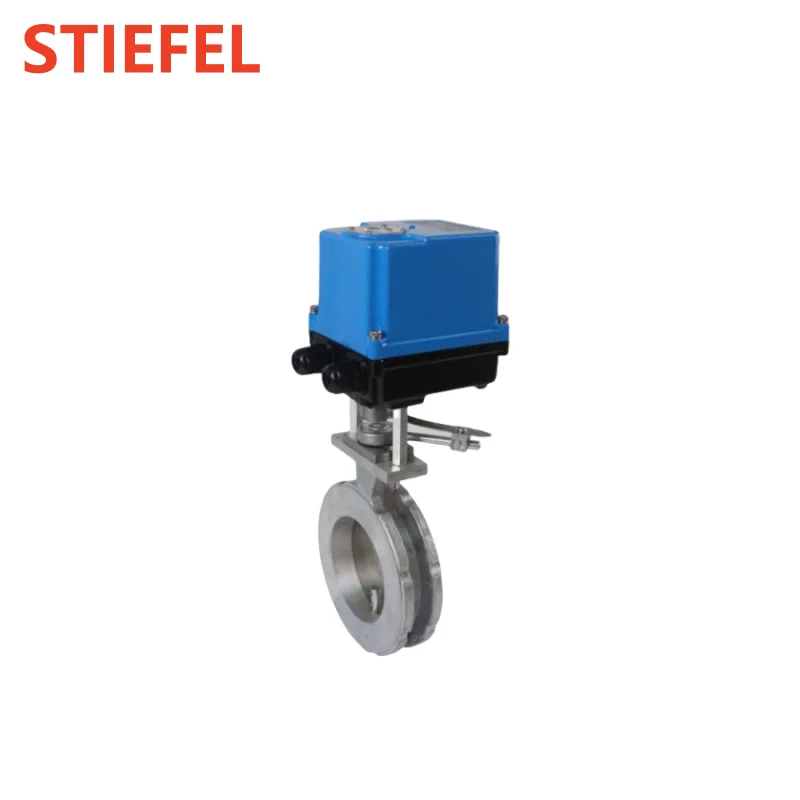
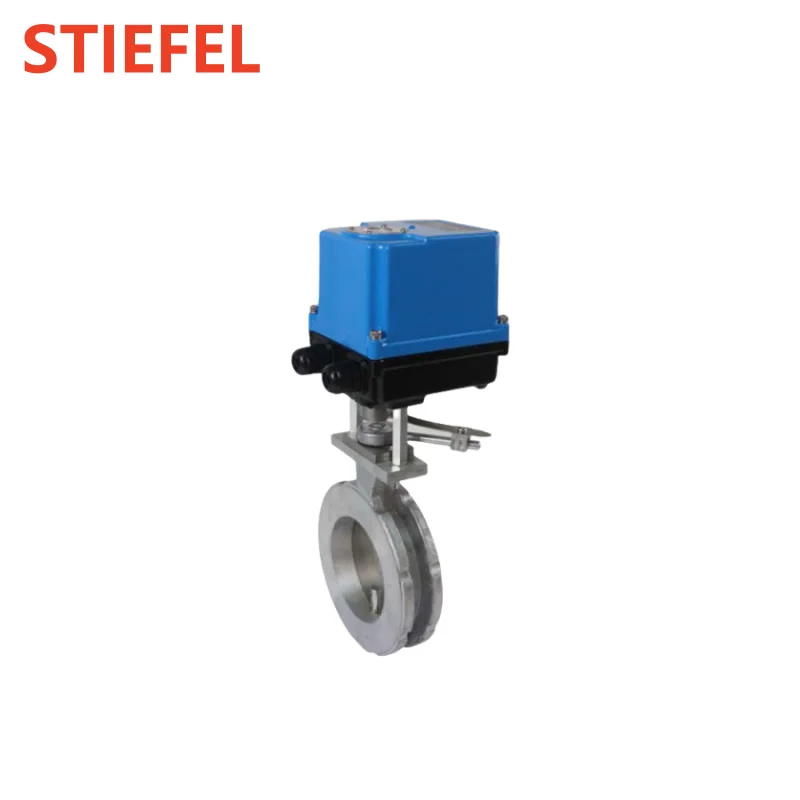
The production of high-quality ceramic products, from sanitaryware and tiles to technical ceramics, is a thermally intensive process governed by precisely controlled firing cycles within industrial kilns. The consistency of the final product's properties—such as strength, porosity, color, and glaze finish—is critically dependent on maintaining exact temperature profiles and specific atmospheric conditions inside the kiln throughout the firing schedule. Achieving this level of control requires a responsive and reliable combustion management system, where Ceramic Kiln Actuators play a pivotal mechanical role. These devices are responsible for physically positioning control elements, such as air intake dampers, exhaust stack dampers, or gas butterfly valves, in accordance with signals from the kiln's programmable logic controller (PLC) or temperature controller.
The primary function of Ceramic Kiln Actuators within this system is to translate an electrical control signal into precise mechanical movement. This movement modulates the flow of combustion air or fuel gas, thereby directly influencing the heat input and the oxidation/reduction atmosphere inside the kiln. For example, in a gas-fired kiln, a Ceramic Kiln Actuator connected to a butterfly valve in the gas line can throttle the fuel supply to maintain a set temperature. Simultaneously, another Ceramic Kiln Actuator on a primary air damper adjusts the air volume to preserve the correct stoichiometric ratio for efficient and clean combustion. The performance requirements for these Ceramic Kiln Actuators are exceptionally demanding, dictated by the harsh operating environment and the need for process precision.
The most significant environmental challenge for Ceramic Kiln Actuators is sustained exposure to high ambient temperatures. Kiln shells radiate heat, and nearby equipment can experience ambient temperatures well above standard industrial limits. Standard electric actuators with typical Class B or F motor insulation may overheat, leading to insulation breakdown, loss of torque, or complete motor burnout. Therefore, Ceramic Kiln Actuators must be specified with high-temperature capability, often requiring motors with Class H insulation or above and internal components that can withstand thermal stress without deformation or seizure. Additionally, the actuator's mounting location or the use of protective heat shields may need to be considered during system design to ensure longevity.
Beyond temperature, the control mode is a crucial selection criterion for Ceramic Kiln Actuators. The two primary types are On/Off (or open/close) and Modulating (or proportional). On/Off Ceramic Kiln Actuators are used for applications like opening or closing a secondary air bypass damper fully at a specific stage in the cycle. Modulating Ceramic Kiln Actuators, which are more common for primary control loops, receive a variable signal (e.g., 4-20mA or 0-10VDC) from the controller and move to any corresponding position between 0% and 100% open. This allows for smooth, continuous adjustment of flows. The positioning accuracy and repeatability of modulating Ceramic Kiln Actuators are vital for maintaining stable control without oscillations or hysteresis that could cause temperature overshoot or atmosphere fluctuations.
Consider the retrofit of an older periodic (shuttle) kiln used for firing specialty art pottery. The original manual dampers require operator intervention based on periodic pyrometer readings, leading to inconsistent firing batches. By installing automated modulating Ceramic Kiln Actuators on the main combustion air damper and the exhaust damper, and linking them to a new digital controller, the entire firing curve can be automated. The Ceramic Kiln Actuators precisely adjust flows according to the programmed recipe. This upgrade, centered on reliable Ceramic Kiln Actuators, results in dramatically improved batch-to-batch consistency, reduced fuel consumption by optimizing the combustion process, and freeing operator time.
For large, continuous tunnel kilns used in high-volume tile production, the reliability of Ceramic Kiln Actuators is even more critical, as a single actuator failure can disrupt the thermal profile along the entire kiln length, potentially ruining a significant amount of product. In such applications, Ceramic Kiln Actuators with robust gearboxes, high duty cycles, and feedback devices (e.g., potentiometers for position indication) are essential. This feedback allows the controller to verify the actuator's position, enabling alarm conditions if the commanded and actual positions deviate, signaling a potential mechanical issue before it affects product quality.
Selecting the right Ceramic Kiln Actuators involves defining several parameters: the required torque (to overcome damper resistance), the operating speed, the control signal type and voltage, the ambient temperature rating, the ingress protection (IP) rating for dust, and the required mechanical interface (shaft type, mounting bracket). Providing details about the damper or valve size, its operating torque, and the specific location's temperature conditions is crucial for a correct recommendation.
We invite kiln operators, engineering firms, and ceramic manufacturers to contact our technical team to discuss your specific Ceramic Kiln Actuators needs. To assist you effectively, please provide information on the application (e.g., type of kiln, control point—air damper/gas valve), the required torque and speed, the ambient temperature near the installation point, and the available control signal and power supply. Based on your specifications, we can identify suitable Ceramic Kiln Actuators from our portfolio or advise on a custom solution. For detailed pricing and delivery information for Ceramic Kiln Actuators, please reach out to us directly with your project requirements.
 EN
EN